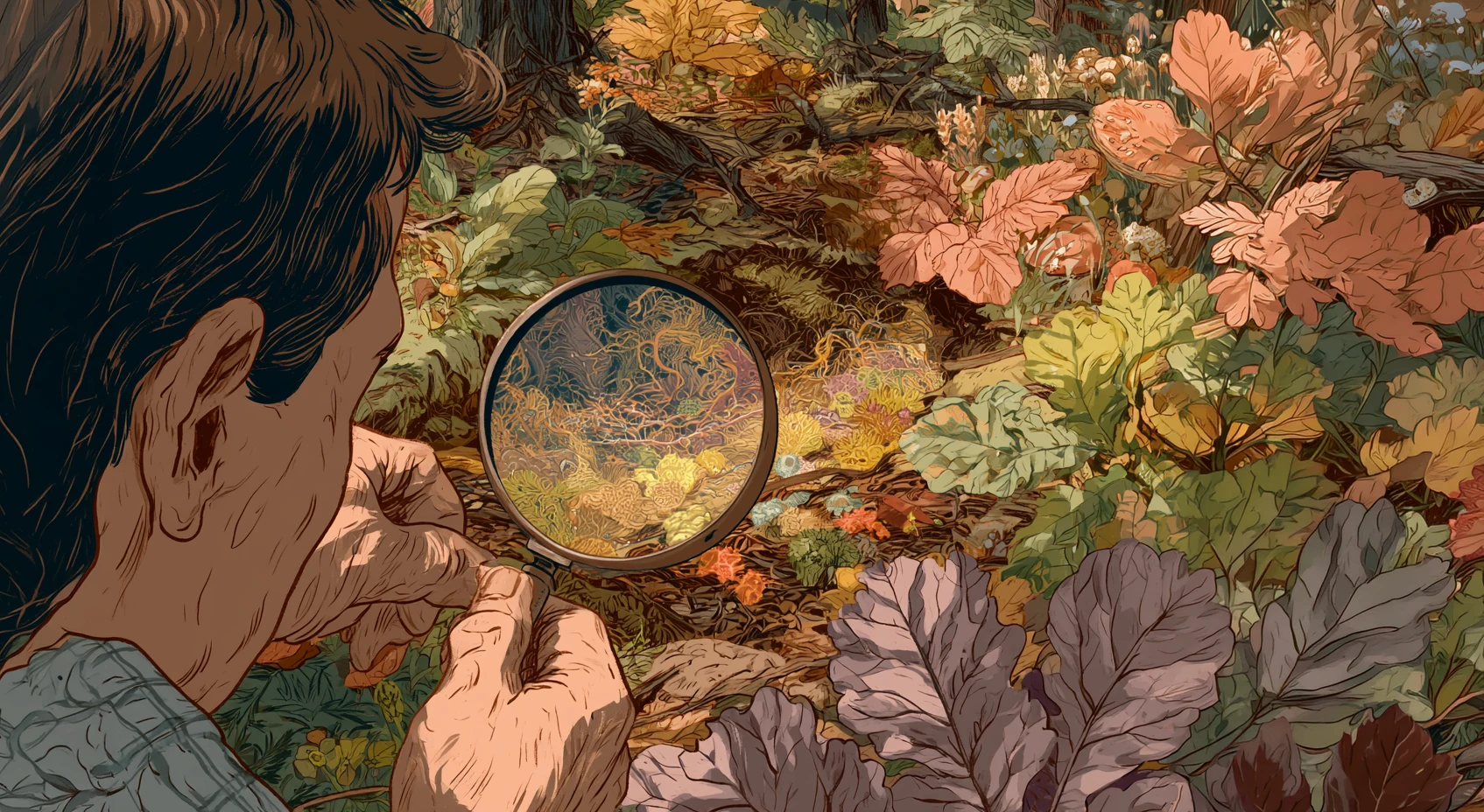
Shared Language
People often ask me where the name Clarity Decoded came from.
The answer is simple.
Most wisdom arrives encoded.
Scientists encode it into research papers.
Engineers encode it into systems.
Founders encode it into products.
Doctors encode it into clinical jargon.
Indigenous elders encode it into songs and stories.
The wisdom is there.
The problem is that most people can’t access it.
My job is to decode it.
To create a shared language between experts and everyone else.
After twenty years in branding, advertising, and strategy, I’ve become convinced that most business problems are actually translation problems.
Not product problems.
Not technology problems.
Not service problems.
Language problems.
The scientist says one thing.
The investor hears another.
The founder says one thing.
The customer hears another.
The engineer says one thing.
The executive hears another.
Everyone is talking.
Nobody is connecting.
The companies that win create a shared language.
The moment people share language, they can share understanding.
And once they share understanding, they can act as one.
One of the clearest examples of this happened while building BiomeMimetics.
On the surface, it was a microbiome science consultancy.
But that wasn’t what people were paying for.
Scientists already understood the science.
The founders hiring them did not.
The challenge wasn’t generating knowledge.
The challenge was creating understanding.
BiomeMimetics had to speak to scientists, founders, and clinical study participants simultaneously. Each group had a different vocabulary, a different worldview, and a different definition of trust.
Most brands choose one audience and lose the others.
Scientific brands often become cold, intimidating, and inaccessible.
Commercial brands often become vague, generic, and scientifically untrustworthy.
Neither approach works.
The breakthrough came when we realized the brand itself had to perform the same service the company sold.
BiomeMimetics helps companies translate complex microbiome science into products people can understand and trust.
The brand had to do that translation before the first meeting ever happened.
A founder visiting the website needed to feel two things simultaneously:
These people understand the science better than I ever will.
And:
These people can explain it to me.
That’s shared language.
Not dumbing things down.
Not removing complexity.
Translation.
There’s a difference.
Larry Weiss later said something that perfectly captured the work:
“Rahul understands science better than any designer I have worked with. He does not simplify it. He clarifies it.”
That distinction matters.
Simplification often destroys meaning.
Translation preserves it.
The goal isn’t to make things smaller.
The goal is to make them understandable.
I’ve seen this same pattern throughout my career.
At Kapoose Creek, scientists were talking about fungal compounds, research pathways, and drug discovery.
Investors were trying to understand opportunity.
The shared language formed around ancient, microbe rich, soil.
Suddenly everyone understood why the science mattered.
At PureStack, engineers were talking infrastructure.
Business owners were trying to buy outcomes.
The shared language became the name itself.
Pure Stack.
Your entire technology stack, rebuilt and managed.
At Fantastic Fungi, scientists and filmmakers were explaining mycelial networks and fungal intelligence.
The shared language became a simple invitation:
Look closer.
At Keep Grazin’, the founders wanted to talk about cassava, Bolivia, and regenerative agriculture.
Consumers wanted to know one thing:
Will this taste good?
The shared language became:
Grilled Cheese. Real Crunch. Who’s Hungry?
Different industries.
Different products.
Same problem.
No shared language.
And therefore no shared understanding.
This is why so many brilliant founders struggle with marketing.
They’re speaking from expertise.
Customers are listening from experience.
The founder is explaining how the machine works.
The customer wants to know where the machine can take them.
The founder is speaking to the head.
The customer is listening from the gut.
Until those worlds meet, communication breaks down.
The irony is that most experts assume the solution is more information.
More slides.
More data.
More features.
More credentials.
In reality, what people usually need is a better metaphor.
A clearer story.
A more useful symbol.
A shared language.
This is why Strategic Compression works.
This is why The Story Is The Symbol works.
This is why Teach People How To See works.
Every one of those ideas is really an exercise in translation.
Finding the words, stories, images, and symbols that allow different people to understand the same truth.
Because the moment two people share language, they can share reality.
The strongest brands don’t win because they’re louder.
They win because they create understanding.
If you’re struggling to explain what makes your company valuable, the problem may not be your product.
The problem may be that your expertise is still encoded.
That’s often what we uncover during a Brand Clarity Audit.
Not better marketing.
Not better design.
A better translation.
Because once people understand what you’re really trying to say, everything else becomes easier.
Part of the Clarity Decoded Knowledge Graph